Air Quality Monitoring & Assessment
Our environmental scientists measure air quality continuously and in real time, both in the open air around a site and in the stacks and flues that discharge to it. The results are interpreted against current standards and reported clearly.
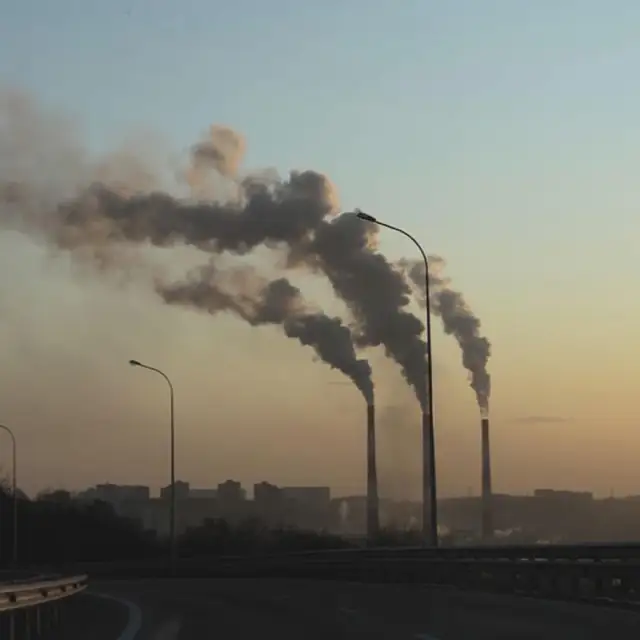
We monitor carbon monoxide, sulphur dioxide, ozone and oxides of nitrogen at parts per billion levels, as well as PM10 particulates and volatile organic compounds including benzene. Instruments log concentrations over a set averaging time, so short studies and longer campaigns that account for changing weather are both possible.
Our work follows recognised international methods and best practice.
Ambient air quality testing
Data are downloaded and interpreted by our scientists against the applicable Kenyan regulations and guidance, with weather data for the monitoring period.
Capabilities cover NO, NO2, SO2, CO, O3, methane and non-methane hydrocarbons and BTEX, using continuous and non-continuous methods.
- Baseline air quality testing for environmental impact assessments
- Boundary monitoring programmes for process industries
- Meteorological studies and statistical or directional analysis
- Real-time snapshot assessments for short studies
- Basic diffusion tube services and wet chemistry testing
Typical applications
- Assessing air quality for authorities under the applicable Kenyan regulations
- Measuring air quality around an industrial site as part of an ISO 14001 environmental management system or a permit
- Supporting land developers with planning applications and environmental impact assessments
Stack sampling and emission testing
Facilities regulated under national or regional rules must comply with the terms of their licence. Our field teams are backed by chemists and technicians and use internationally recognised protocols, with modified methods for special applications. Our lab provides a clean environment for sample preparation and recovery.
- Emission monitoring for compliance
- Gas turbine commissioning and performance testing
- Process optimisation testing
- CEMS and PEMS verification studies to recognised international methods
- Combustion gases: NO, NO2, SO2, O2, CO2, CO and unburnt hydrocarbons
- TOC and VOC by online FID
- Particulate matter, halides, multi-phase and trace elements
- Dioxins, PAHs and PCBs
- Regulatory compliance dispersion modelling
Compliance monitoring
We carry out routine emission compliance monitoring, also called stack emissions testing, in line with the applicable Kenyan regulations, typically twice a year or annually. Real-time data allow us to advise your team on site. Clients range from fuel and power, chemicals, metals, energy from waste, incineration and landfill to public bodies.
Industries we serve
Our sampling teams work across many industries.
- Energy from waste and incinerators
- Power generation and renewable energy
- Cement and lime
- Chemical and pharmaceutical
- Metals processes
- Gas turbines and boilers
- Crematoria
- Petrochemical
- Landfill gas engines and flares
- Wood and fibre board processes
Quality and safety
Methods include extensive QA/QC procedures, calibrated equipment and up-to-date procedures. We work to ISO/IEC 17025 requirements and a safety-first approach, with the aim that data are accurate, reliable and acceptable to the national regulator.
Additional services
- Air and odour dispersion modelling using ADMS and AERMOD
- Instrument servicing, maintenance and calibration
- Consultancy and training in EN 14181
- Method development and implementation of ISO/IEC 17025 procedures for testing laboratories
Local exhaust ventilation (LEV) assessment
Local exhaust ventilation captures harmful substances at the source before they enter the workplace air. Systems wear, block and get damaged over time, so regular inspection and testing is essential, at the intervals the law requires.
Our occupational hygienists examine capture and duct velocities using anemometers, pitot tubes, smoke tests, pressure measurements and visual inspection. Where larger ductwork lacks test points, we can install them where it is safe to do so. We can also monitor the people the LEV protects, and monitor the final exhaust to atmosphere, then report with practical recommendations.
Need a test, a survey or a monitoring programme?
Tell us what you need tested, where and by when. We reply with a quote and the sampling plan.